The cash radar shows the week your money would run short, thirteen weeks ahead
A new Cash radar tab in Books shows the next thirteen weeks from today's money, with your cheques, bills on credit, salaries and expected customer payments. The first short or tight week is named before it arrives, on the work desk and in a morning Telegram message.
Product update 2 min read
What changed
Books has a new Cash radar tab. It starts from what is in your money accounts today and walks forward week by week for thirteen weeks:
- Certain: cheques you wrote and cheques you hold, bills bought on credit and salaries, each on its own date. A cheque or bill already past its date counts in this week.
- Likely: also adds unpaid invoices after the number of days your customers usually take to pay, the next copies of recurring invoices, and money noted on customer files.
A week is short (red) when even the likely line goes below zero, and tight (amber) when only the certain line does. Tight means the week holds only if customers pay on time. The first week in trouble is named at the top of the tab.
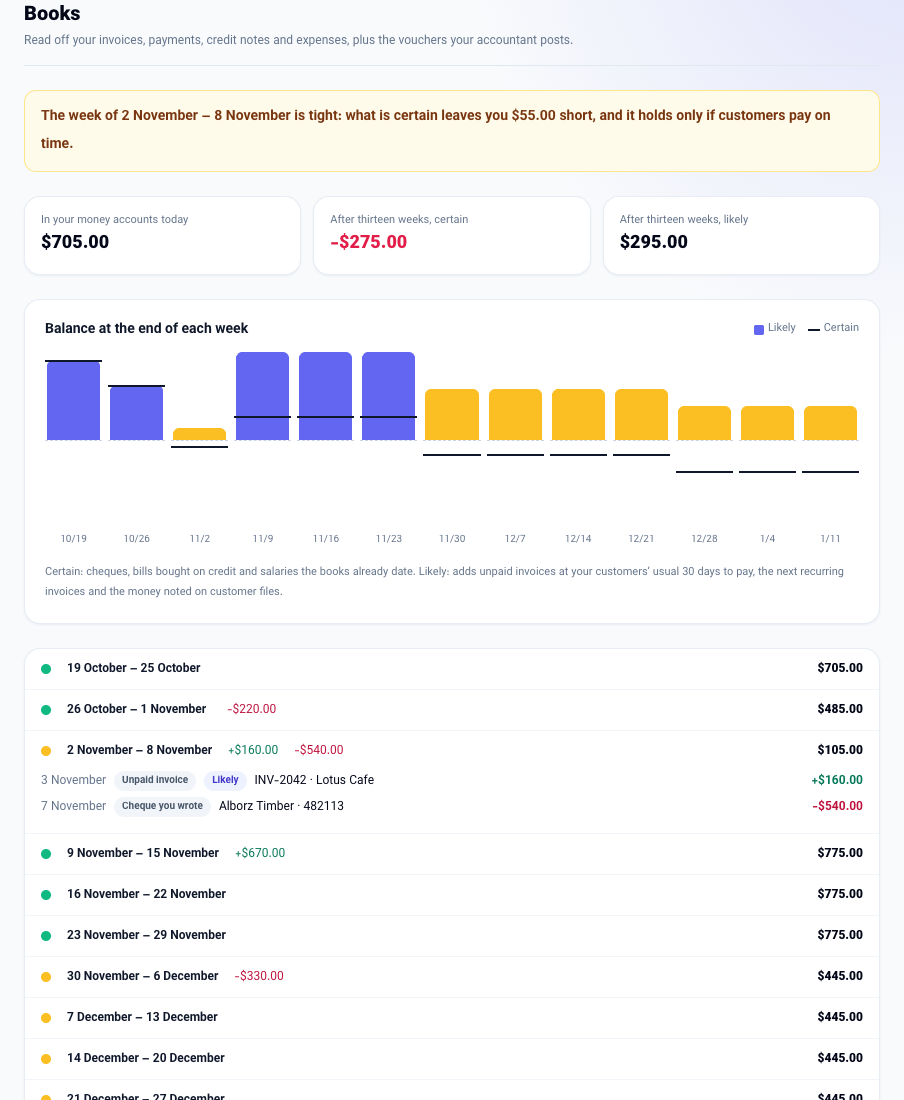
Below the chart:
- Every week opens to show the cheques, bills, salaries and invoices that fall in it.
- Chase these to cover the gap lists your largest unpaid invoices.
- Bounced cheques in the last year shows who to think twice about before the next sale on credit.
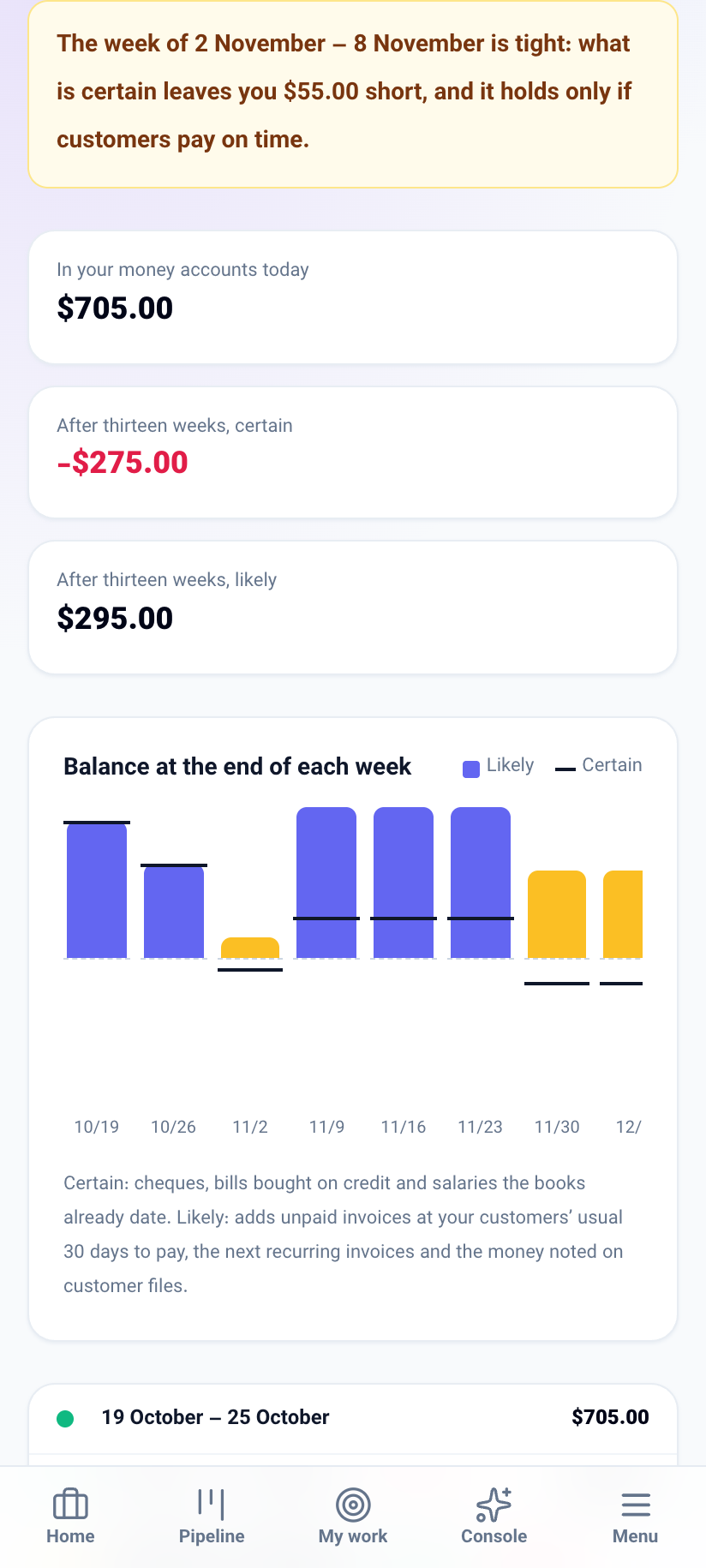
How to use it
- Open Accounting, then Books, and choose the Cash radar tab. It is also in the money menu under Dashboard → Cash radar.
- Read the line at the top: it names the first week that is short or tight, and by how much.
- Tap a week to see what is due in it, then chase the invoices listed under Chase these to cover the gap.
- You can also ask the console, for example "Do we have enough money for our cheques next month?"
Good to know
- The warning also appears on the work desk under Accounting, and the owner gets it once each morning on Telegram (if Telegram is linked), the first time a week turns short or tight. The same warning is not repeated for seven days.
- Your customers' usual payment time comes from your paid invoices of the last year. With fewer than three, it assumes thirty days.
- Only seats that can read the books see the radar.